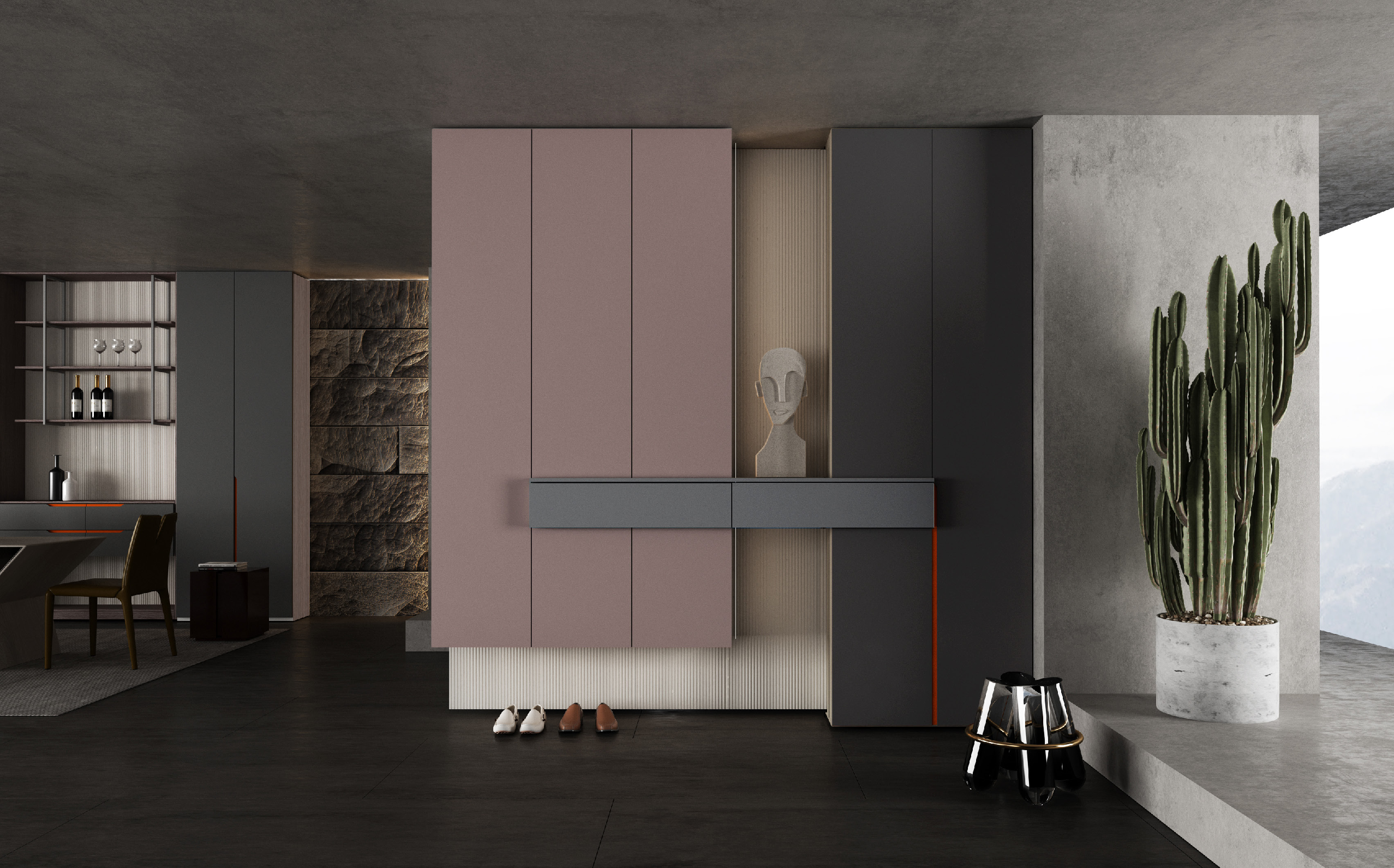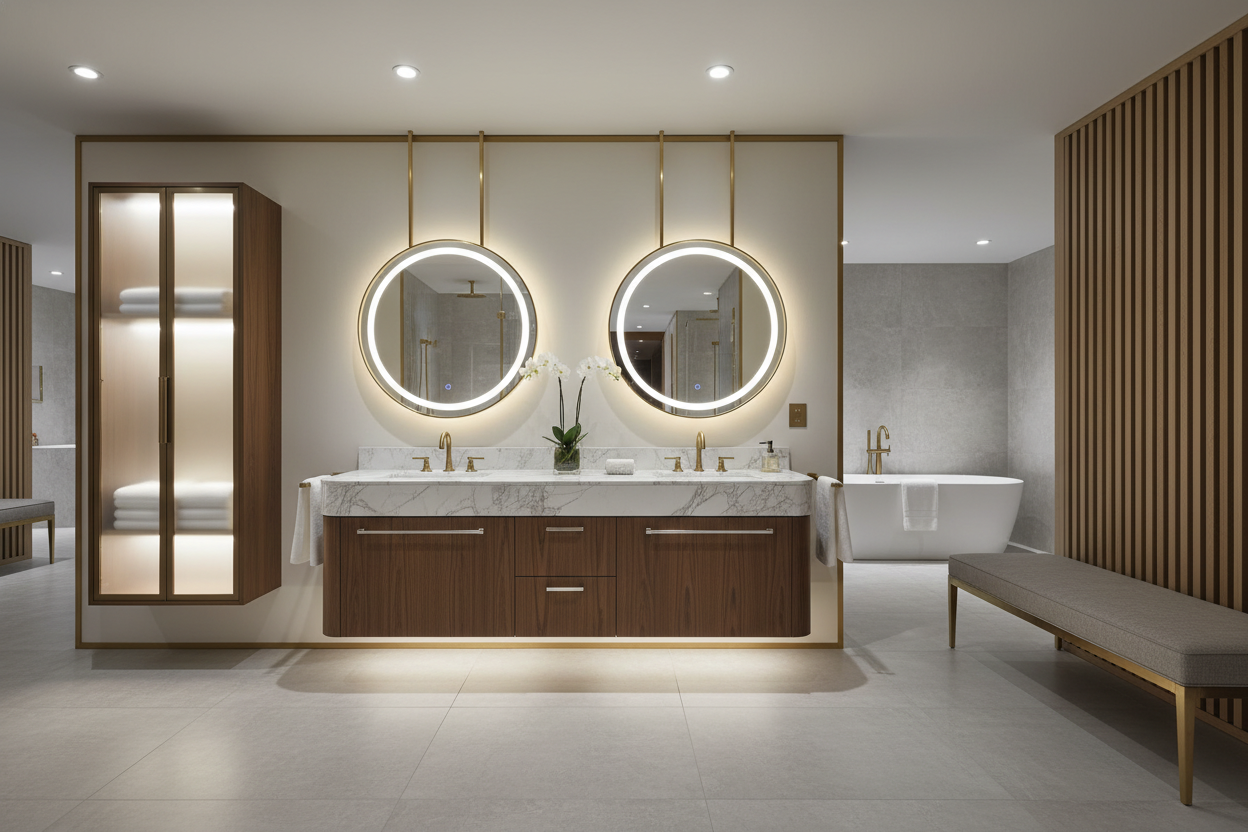
Une salle de bains d'hôtel véritablement exceptionnelle se présente comme un tout harmonieux, et non comme un ensemble d'éléments disparates. Parvenir à cette intégration parfaite constitue le principal défi et la principale opportunité du design hôtelier. Le mobilier de salle de bains des hôtels doit non seulement être esthétique et durable, mais aussi s'harmoniser parfaitement avec l'agencement, l'éclairage et les équipements. Cet article explore l'art et la science de la création d'une salle de bains cohérente où chaque élément met en valeur les autres, sublimant ainsi l'expérience client.
Le pouvoir d'un récit de conception cohérent
Avant de choisir un seul élément, il est essentiel de définir un thème de design clair. S'agit-il d'un « spa urbain », d'une « retraite en bord de mer » ou d'un « chic industriel » ? Ce thème guidera tous les choix suivants, garantissant ainsi la cohérence de l'ensemble : mobilier de salle de bains pour les projets hôteliers , carrelage, robinetterie et éclairage. Une incohérence de style, comme l'association d'une vasque traditionnelle et ornée avec une plomberie apparente ultramoderne, crée un désordre visuel et nuit à l'impression de luxe.

Maîtriser la mise en page : les fondements de la fonctionnalité
L'agencement détermine la circulation et l'atmosphère de l'espace. Le mobilier doit être conçu pour s'intégrer et mettre en valeur cet agencement.
1. Zonage des zones humides et des zones sèches
Une salle de bains bien conçue sépare clairement la zone humide (douche, baignoire) de la zone sèche (meuble-lavabo, toilettes, rangements). Dans les projets hôteliers, le meuble-lavabo , et notamment le meuble-lavabo, structure la zone sèche. Dans les petites salles de bains, un meuble-lavabo suspendu peut créer une impression d'espace. Dans les suites plus spacieuses, un meuble-lavabo double ou un meuble indépendant peut devenir un élément central. L'objectif est de veiller à ce que le meuble-lavabo soit facilement accessible sans gêner le passage vers la douche ou les toilettes.
2. Créer une expérience digne d'un spa
Pour les propriétés de luxe, la salle de bains doit évoquer un spa haut de gamme. Cela implique :
- Des proportions généreuses : un grand plan de toilette à surface unique avec deux vasques permet aux couples d’utiliser l’espace simultanément sans se sentir à l’étroit.
- Sièges intégrés : une banquette intégrée ou un tabouret indépendant offrent aux invités un endroit où s’asseoir, renforçant ainsi l’impression de détente et de bien-être.
- Rangement optimisé : Outre le meuble-lavabo, pensez à une colonne de rangement haute et dédiée au linge pour les serviettes et les peignoirs, ainsi qu’à des étagères ouvertes dans les zones humides pour les produits de bain, contribuant ainsi à une atmosphère organisée et sereine.
Intégration technique : éclairage, plomberie et électricité
C'est là que l'ingénierie de précision rencontre le design. Une mauvaise coordination à ce niveau peut ruiner un concept pourtant prometteur.
1. Conception collaborative de l'éclairage
L'éclairage est le bijou de la salle de bains, et il doit être conçu en harmonie avec le mobilier.
- Éclairage ciblé au niveau de la coiffeuse : L’erreur la plus fréquente consiste à se fier à un seul plafonnier, qui projette des ombres sur le visage. Des appliques verticales de part et d’autre du miroir ou un miroir éclairé horizontal offrent un éclairage uniforme et flatteur pour la toilette. Le mobilier de salle de bains des hôtels doit être conçu pour permettre l’installation du câblage et des luminaires.
- Éclairage ambiant et d'accentuation : les spots encastrés au plafond assurent un éclairage général, tandis que les bandes LED placées sous un meuble-lavabo suspendu ou à l'intérieur d'étagères ouvertes peuvent créer une lueur chaleureuse et accueillante ainsi qu'une esthétique high-tech.
2. Coordination avec les services de plomberie et d'installation.
Le style des robinets et des pommes de douche doit être soigneusement assorti à celui du meuble-lavabo.
- Types de montage : Un robinet mural nécessite une préparation du plan de travail différente de celle d’un robinet sur plage. Ce choix doit être fait avant la fabrication du meuble-lavabo. De même, une vasque requiert une structure de plan de travail différente de celle d’un lavabo encastré.
- Harmonie des finitions : Les finitions des robinets, du système de douche, des porte-serviettes et même des poignées de meubles doivent être coordonnées. Un robinet en nickel brossé s’accorde parfaitement avec des poignées de tiroir en nickel brossé, créant ainsi un ensemble harmonieux.
3. Intégration de la technologie et des prises électriques
Le client moderne voyage avec des appareils électroniques. Le mobilier de salle de bains des hôtels doit répondre à ce besoin de manière discrète et sécurisée.
- Prises GFCI intégrées : L’ intégration de prises sur le côté du meuble-lavabo ou, mieux encore, dans un tiroir dédié, permet de dégager le plan de travail et de protéger les appareils contre les dégâts d’eau. Cela nécessite une planification précise avec l’équipe d’électriciens.
- Meubles-lavabos connectés : Certains projets incluent désormais des chargeurs sans fil intégrés à la surface du meuble-lavabo ou des haut-parleurs Bluetooth intégrés.
Processus de conception et de fabrication intégré de GoldenHome
Chez GoldenHome, nous évitons les écueils d'une conception décousue en proposant un service intégré. Nous ne vendons pas seulement des meubles ; nous offrons une solution complète pour votre salle de bain.
- Atelier de conception collaborative : Nous travaillons directement avec votre équipe d’architectes et de designers d’intérieur dès les premières étapes, en fournissant des blocs CAO et des modèles 3D de notre mobilier à intégrer dans les plans d’ensemble.
- Coordination technique : Nous réalisons des plans techniques détaillés qui précisent les découpes pour la plomberie, les pré-installations électriques et les détails de montage. Ainsi, l’entrepreneur général et les sous-traitants savent exactement ce qui est nécessaire derrière les murs et sous les planchers.
- Approvisionnement unifié en matériaux : Nous pouvons souvent nous procurer et fabriquer non seulement le meuble-lavabo, mais aussi les cadres de miroirs assortis, les étagères et autres éléments de menuiserie, garantissant ainsi une parfaite harmonie des couleurs et des finitions pour tous les éléments en bois de la salle de bain.
Le secret d'une salle de bains d'hôtel réussie réside dans l'harmonie invisible entre tous ses éléments. En considérant le mobilier de salle de bains comme une composante à part entière de l'ensemble, et non comme un simple ajout après coup, vous créez un espace d'une fonctionnalité irréprochable, d'une beauté saisissante et d'un luxe inoubliable pour chaque client.