Kitchen Renovation Cost Is More Than a Budget — It Is a Business Model
For homeowners, kitchen renovation cost represents an expense. For dealers, contractors, and franchise investors, kitchen renovation cost represents revenue structure and profit potential.
Understanding how average kitchen remodel cost is distributed allows renovation companies to design stronger pricing strategies and increase gross margins. In 2026, kitchen remodeling cost continues to rise due to labor inflation and raw material adjustments — making cost control and supply chain efficiency more critical than ever.

Typical Kitchen Renovation Cost Structure
In a mid-range project priced at $40,000, the cost distribution often looks like this:
- Kitchen cabinet cost: $12,000 – $18,000
- Labor: $8,000 – $12,000
- Countertops: $4,000 – $6,000
- Appliances: $5,000 – $8,000
- Other materials & lighting: $3,000 – $5,000
Because cabinets represent the largest percentage of kitchen renovation cost, dealers who optimize cabinet sourcing gain the strongest margin advantage.
Dealer Gross Margin Analysis
1. Cabinet Margin Potential
Depending on sourcing strategy, cabinet gross margins typically range between 30% and 50%. Factory-direct partnerships significantly improve profitability compared to local distributor purchasing.
2. Design Service Value
Many dealers overlook design service revenue. Offering 3D kitchen planning increases perceived value and supports higher kitchen remodeling cost packages.
3. Installation Revenue Stream
Installation services often carry stable margins. When bundled correctly, they increase total project profitability without drastically raising visible kitchen renovation cost for customers.
Franchise Investment Perspective
For franchise investors entering the kitchen remodeling industry, understanding average kitchen remodel cost helps project revenue expectations.
If a showroom completes:
- 8 projects per month
- Average project value: $35,000
- Annual revenue potential: $3,360,000+
Even with conservative net margins of 12%–18%, the kitchen renovation business model remains highly attractive.
Why Kitchen Cabinets Drive the Entire Profit Structure
Kitchen cabinets define both aesthetic value and cost structure. High-quality custom kitchen cabinets justify higher overall kitchen renovation cost, while modular systems enable competitive pricing in mid-range markets.
Dealers who control kitchen cabinet cost through large-scale manufacturers can:
- Offer competitive pricing
- Maintain stable profit margins
- Reduce supply delays
- Scale showroom expansion
Market Demand Growth in 2026
Several factors continue to increase demand for kitchen remodeling services:
- Rising home values
- Increased home renovation spending
- Shift toward functional open kitchens
- Real estate resale improvements
As demand grows, kitchen renovation cost transparency becomes a key sales tool. Customers increasingly search “how much does a kitchen remodel cost” before making decisions.
How to Increase Profit Without Raising Visible Cost
1. Optimize Supply Chain
Partnering directly with a large-scale cabinet manufacturer reduces procurement expenses and stabilizes pricing.
2. Standardize Modules
Using modular cabinet systems shortens installation time, reducing labor cost while keeping kitchen renovation cost competitive.
3. Offer Tiered Packages
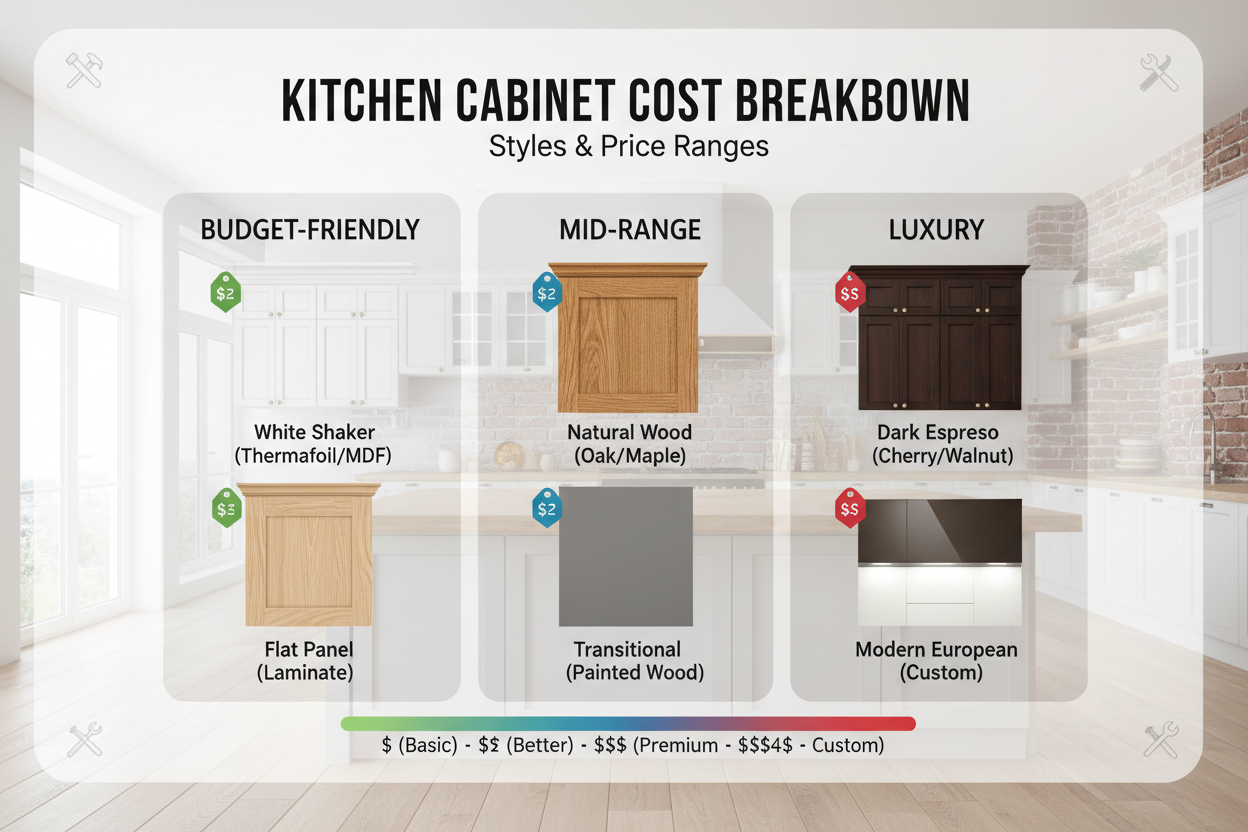
Structured pricing (Basic / Premium / Luxury) increases average ticket size and improves close rates.
How Goldenhome Supports Dealer Profitability
With over two decades of manufacturing experience and advanced intelligent production facilities, Goldenhome provides scalable cabinet solutions designed for global partners.
Advantages include:
- Large production capacity
- Consistent quality control
- Flexible customization options
- Competitive wholesale pricing
- International logistics support
For dealers and franchise investors, this ensures stable kitchen cabinet cost, predictable margins, and long-term supply reliability.

Risk Management in Kitchen Renovation Business
While kitchen renovation cost projects are profitable, risk control is essential:
- Avoid underpricing projects
- Accurately estimate labor time
- Secure reliable cabinet suppliers
- Implement digital project tracking
Conclusion: Kitchen Renovation Cost as a Growth Strategy
Kitchen renovation cost is not simply a pricing discussion — it is a strategic growth engine for renovation businesses. By optimizing cabinet sourcing, structuring tiered packages, and strengthening supply chains, dealers can increase margins without sacrificing competitiveness.
Goldenhome provides the manufacturing strength and product diversity needed to support dealers, distributors, and franchise partners in expanding their kitchen remodeling business sustainably.