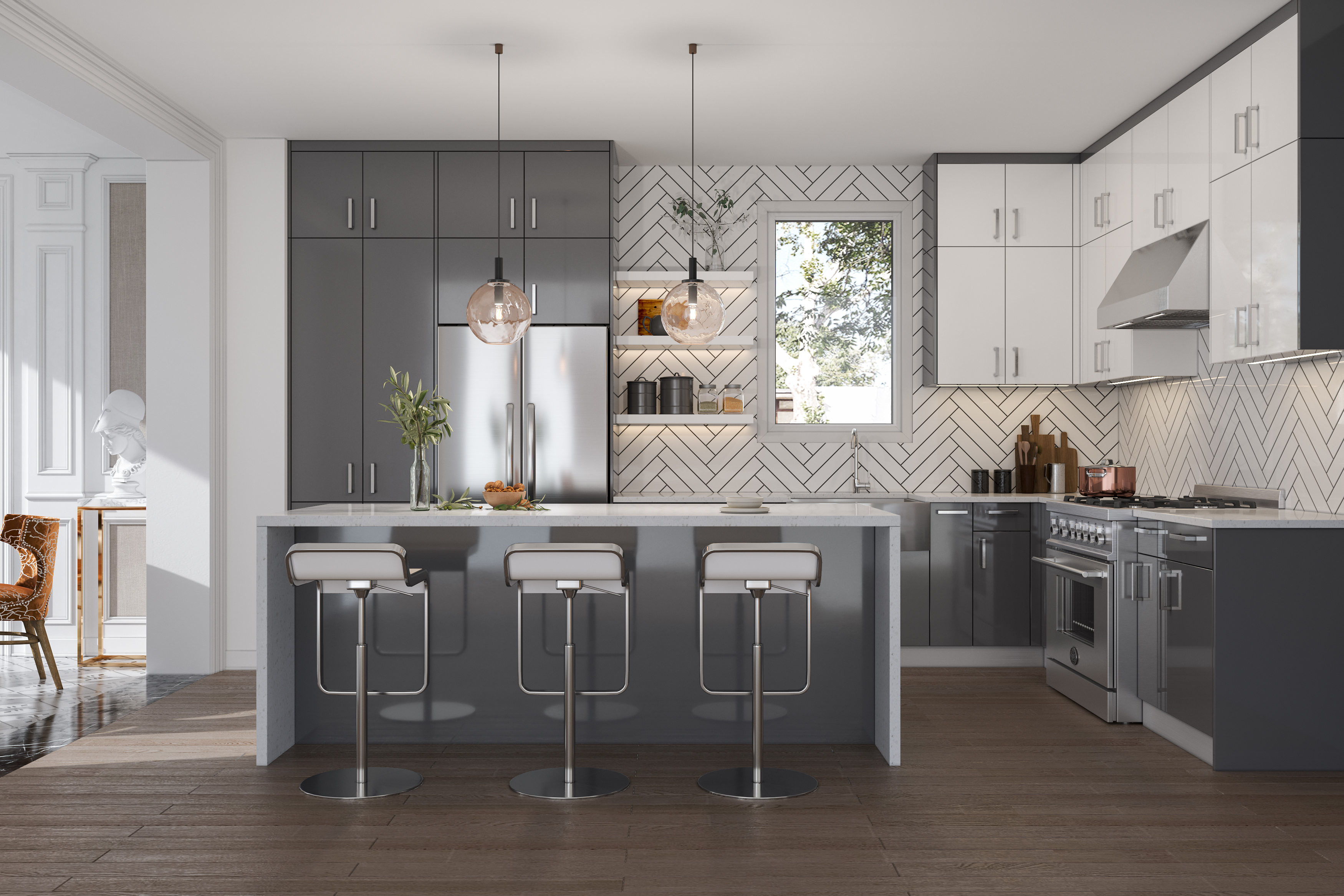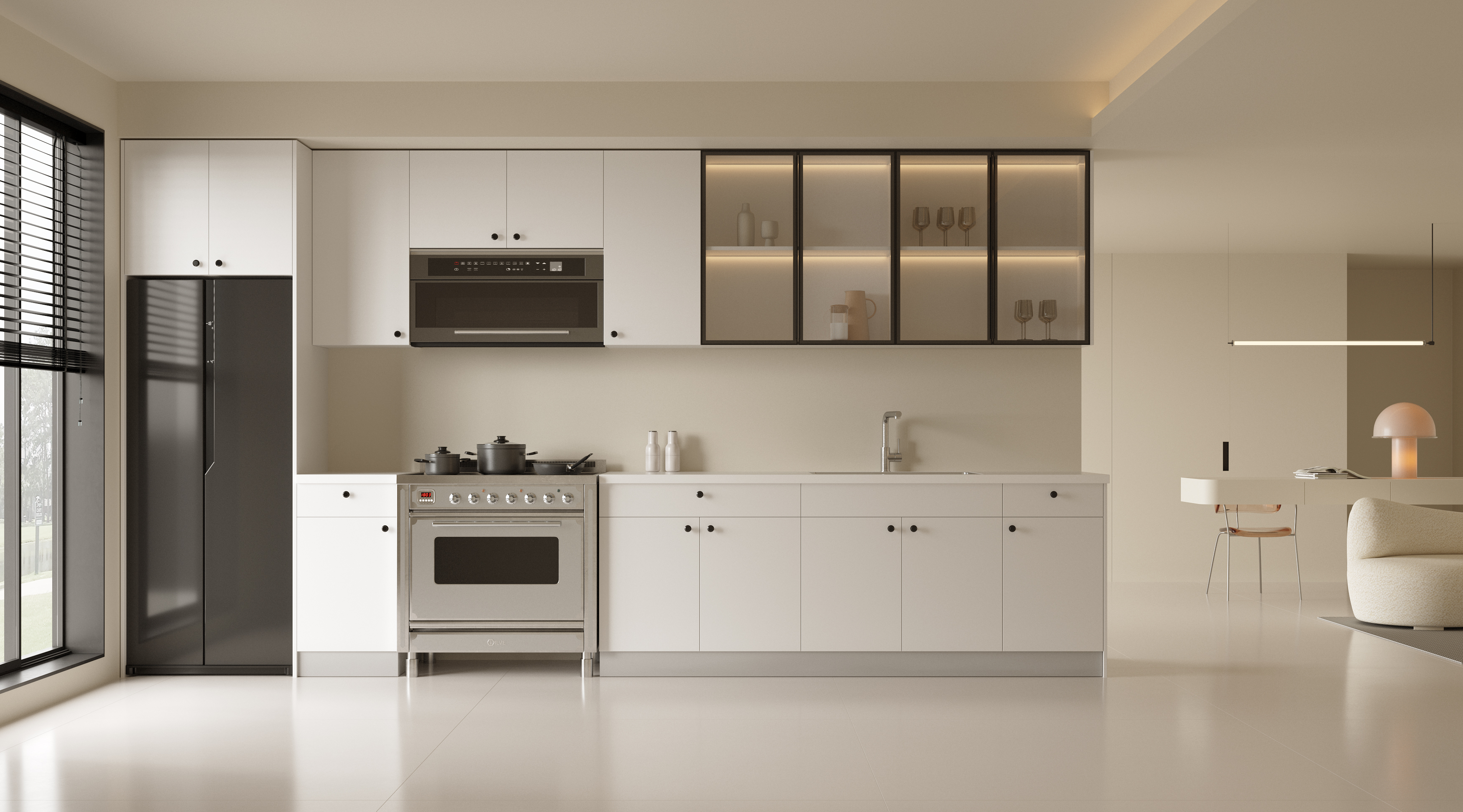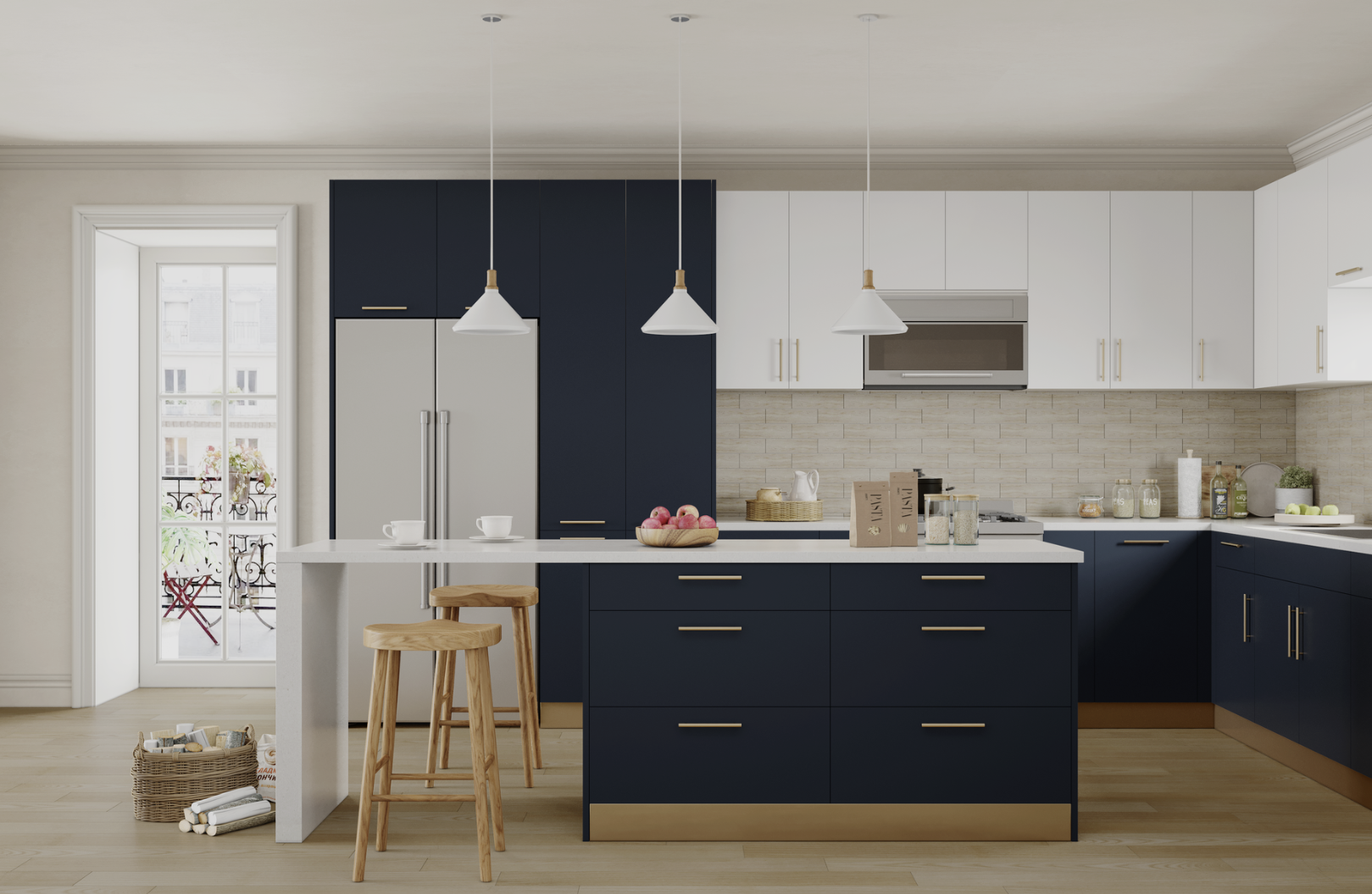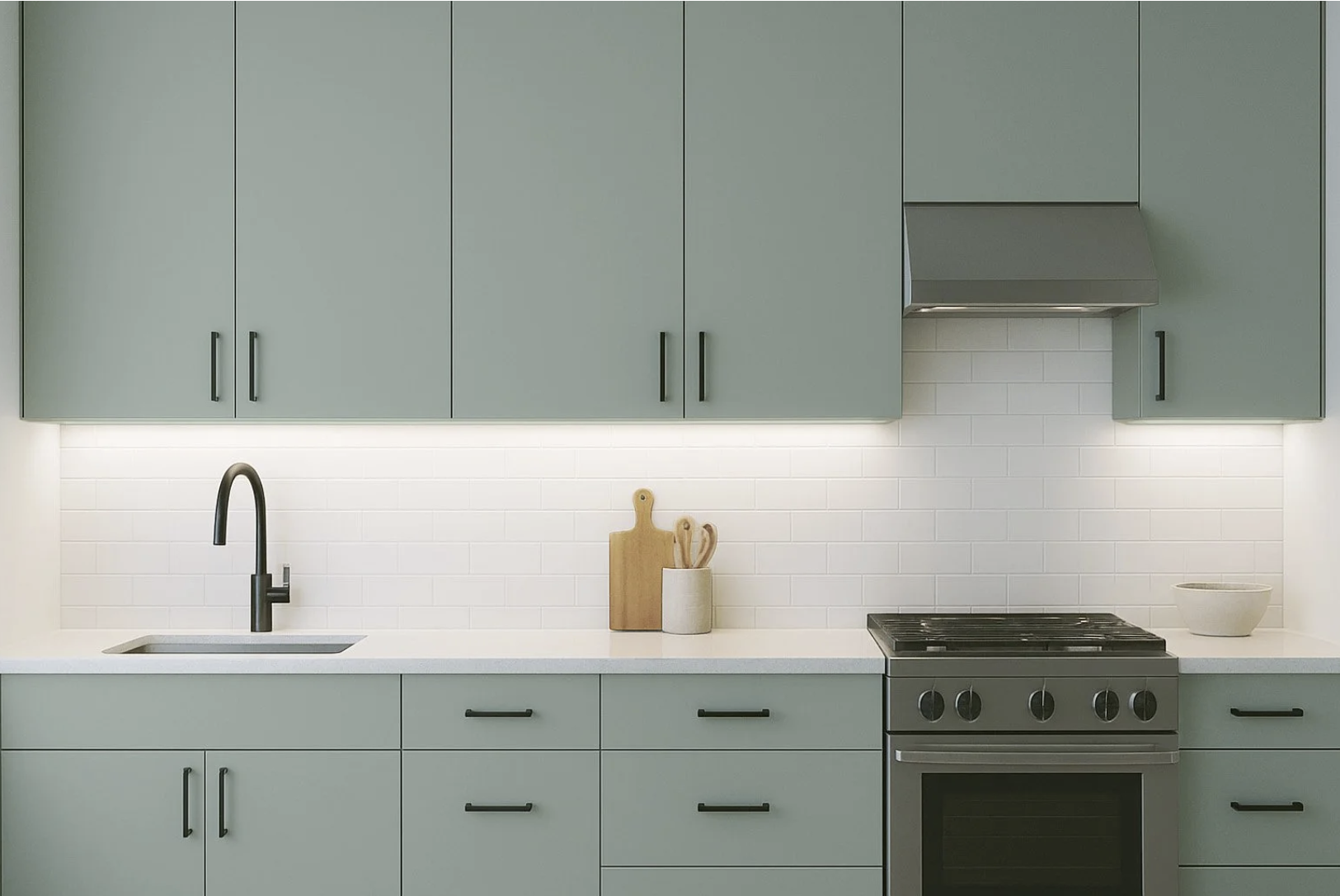
In the world of construction, not all kitchen cabinets are created equal. While aesthetic appeal captures initial attention, it's the underlying construction quality that determines long-term performance and client satisfaction. For builders, developers, and property managers, understanding how to evaluate kitchen cabinets for construction projects based on substantive quality metrics is essential for protecting your reputation and minimizing callbacks. This definitive guide moves beyond surface-level assessment to examine the critical factors that separate premium cabinets from those destined for premature failure.
The Foundation: Understanding Box Construction
The cabinet box forms the structural foundation that everything else depends upon. Superior construction in this area separates professional-grade cabinets from consumer-grade products.
Material Matters: Particleboard vs. Plywood
The choice between particleboard and plywood for cabinet boxes represents one of the most significant quality differentiators:
- Particleboard: Composed of compressed wood particles, it offers cost advantages but vulnerable to moisture damage and screw stripping over time.
- Moisture-Resistant (MR) Particleboard: An improvement for damp environments, but still lacking the structural integrity of plywood.
- Plywood: Constructed from cross-laminated wood veneers, plywood offers superior screw-holding capacity, structural stability, and moisture resistance, making it the preferred choice for quality-focused kitchen cabinets for construction projects.
Joint Construction Techniques
How the box components connect significantly impacts durability:
- Stapled Construction: Common in economy cabinets, this method provides adequate initial strength but may loosen over time.
- Dowel Construction: Wooden dowels with glue create stronger joints than staples alone.
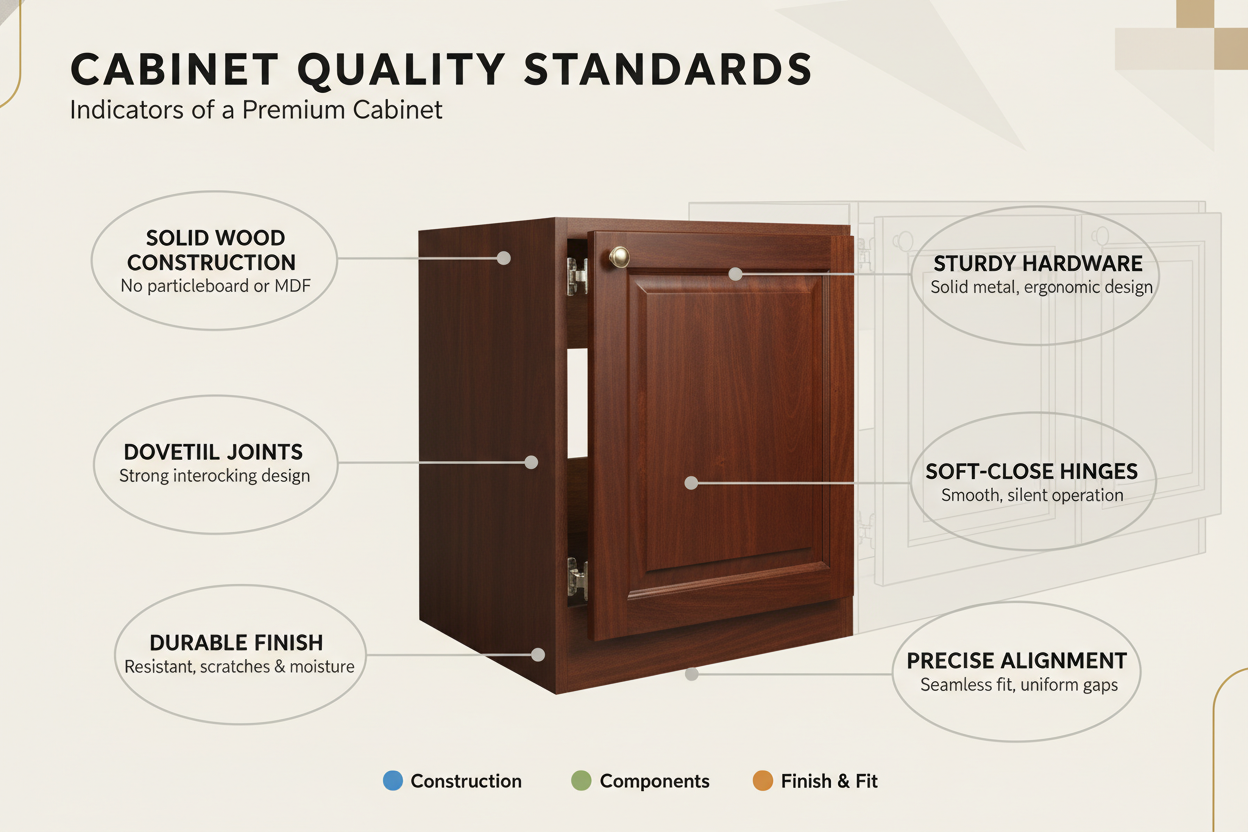
- Dovetail Joints: The gold standard for drawer boxes, creating incredibly strong, self-reinforcing connections that withstand heavy use.

Door and Drawer Construction: The Visible Quality Indicators
While doors and drawers represent the most visible elements, their construction methods reveal much about overall cabinet quality.
Door Construction Methods
Different construction techniques offer varying levels of durability and aesthetic appeal:
- Thermofoil: A vinyl material heated and molded over medium-density fiberboard (MDF), offering excellent moisture resistance and easy maintenance.
- Laminate: Multiple layers of resin-saturated paper fused under high pressure, creating an extremely durable surface resistant to scratches and stains.
- Solid Wood: The premium choice offering natural beauty and repairability, though requiring more maintenance than synthetic materials.
Drawer Box Quality Assessment
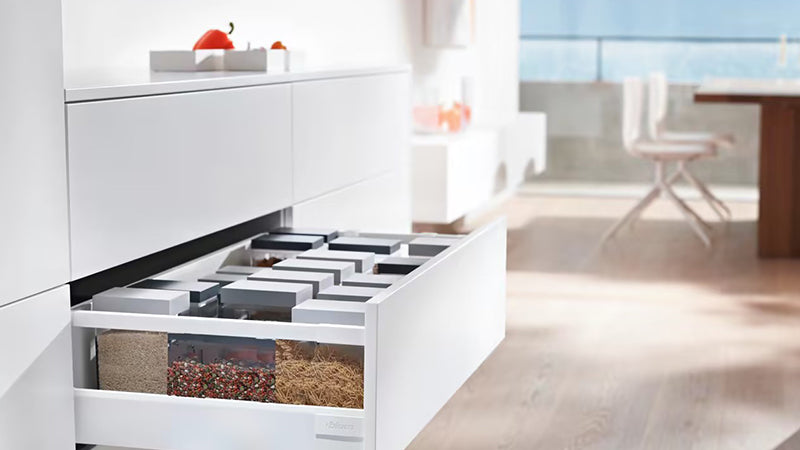
Drawers endure the most mechanical stress in any kitchen. Quality indicators include:
- Material Thickness: ½" to ⅝" sides indicate better quality than ⅜" materials.
- Bottom Construction: ¼" plywood bottoms seated into grooves are superior to stapled hardboard.
- Guide Systems: Full-extension, soft-close guides with adequate weight capacity are essential for long-term performance.
Hardware: The Mechanical Heart of Cabinet Function
Often overlooked in specification, hardware quality directly impacts user perception and longevity.
Hinge Quality Considerations
Quality hinges feature:
- Solid metal construction (not plated plastic)
- Six-way adjustability for precise alignment
- Soft-close mechanisms for quiet operation
- Over-travel capability for easy door removal
Drawer Slide Specifications
Professional-grade drawer slides should offer:
- Minimum 75-pound load capacity
- Full extension for complete access to drawer contents
- Undermount design for clean appearance and increased strength
Finish Quality: Beyond Surface Deep Assessment
The quality of cabinet finishes determines both appearance retention and durability.
Paint Finish Standards
Superior painted finishes feature:
- Multiple primer and topcoat layers
- Catalyzed conversion varnish for exceptional hardness
- Even coverage on all surfaces, including interiors
Stain and Clear Coat Evaluation
Quality stained finishes should demonstrate:
- Consistent color penetration without blotchiness
- Adequate film build for protection
- Smooth, uniform sheen across all components
GoldenHome's Quality Assurance Protocol
Our commitment to quality in kitchen cabinets for construction projects is implemented through a rigorous multi-point verification system:
Material Certification
All incoming materials are certified for compliance with industry standards for structural integrity, moisture resistance, and finish durability.
Production Process Controls
Computer-controlled machining ensures component consistency, while manual quality checks verify joinery integrity and finish quality at multiple production stages.
Performance Testing
Random samples undergo cycle testing, impact resistance evaluation, and environmental simulation to verify long-term performance under real-world conditions.
Implementing Quality Verification on Your Projects
Builders can incorporate these practical verification steps when evaluating kitchen cabinets for construction projects:
Pre-Installation Inspection
Before installation begins, examine sample units for:
- Drawer and door operation smoothness
- Finish consistency across all components
- Hardware quality and adjustability
Site Condition Assessment
Ensure the installation environment meets manufacturer specifications for humidity levels and temperature to prevent future issues.
By looking beyond superficial appearance and understanding the substantive quality metrics that define superior kitchen cabinets for construction projects, construction professionals can make informed decisions that deliver lasting value to their clients while protecting their own business interests through reduced warranty claims and enhanced customer satisfaction.